Many people feel self-conscious about crooked teeth. They may have trouble biting or cleaning their teeth. They may want a straighter smile. Braces can fix these issues.
Metal braces use stainless steel bands, brackets, and wires to gently shift teeth over time. Here you will know about types of braces, how they move teeth, and what to expect during treatment.
Dentists suggest different braces for various dental needs. Each kind helps straighten teeth in its own way.
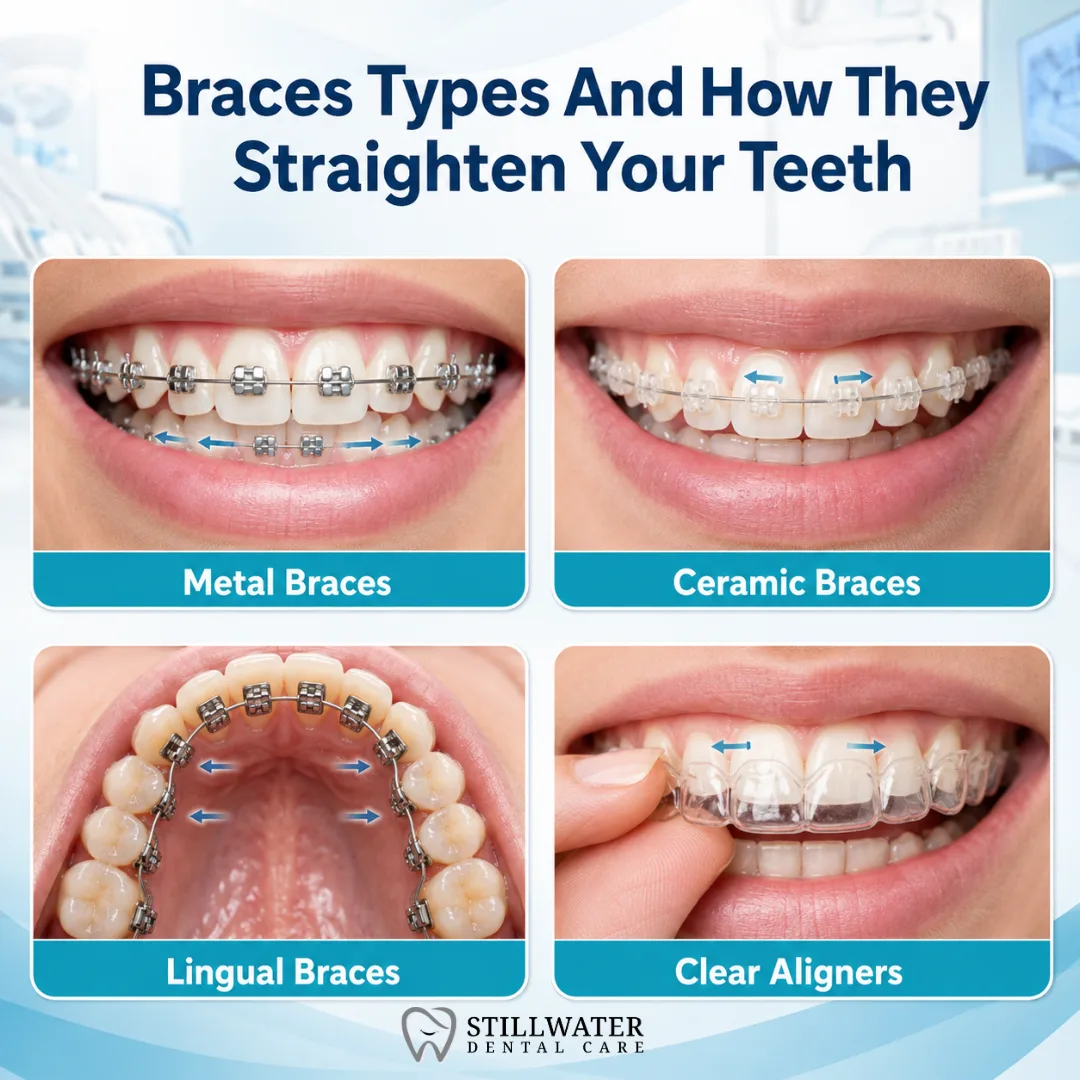
Traditional metal braces use high-grade stainless steel bands, brackets, and archwire to shift teeth over time. An orthodontist bonds the metal brackets to the teeth during the application process.
The system works with brackets and a tied archwire that apply constant pressure to move teeth. Elastic ties secure the wire to each bracket and help guide tooth movement. Orthodontics lists five main types of braces: metal, ceramic, self-ligating, clear aligners, and lingual braces. Clear braces and lingual braces serve as alternative options, while metal braces remain the oldest and most common method.
Ceramic braces are a popular alternative to traditional metal braces. They use clear or tooth-colored materials that blend in with the teeth. This makes them less noticeable. Like metal braces, they consist of brackets and wires that apply gentle pressure on the teeth over time. Orthodontists attach ceramic brackets to each tooth using dental glue.
Ceramic braces provide effective treatment for various alignment issues. Patients appreciate their aesthetic appeal compared to metal options. These types of braces can be just as effective as traditional designs when correcting malocclusion and achieving desired tooth movement.
The wire connects through these brackets, allowing orthodontic adjustments throughout treatment periods.
Clear aligners offer a modern approach to teeth straightening. These transparent trays gently shift teeth over time, similar to traditional braces. Dentists create a series of custom-fit aligners for each patient. Patients wear each set for about two weeks before moving to the next one.
Aligners apply consistent pressure on the teeth. This gradual movement helps achieve the desired alignment without brackets or wires. Clear aligners are removable, making them easy to clean and comfortable during meals. Many people prefer this discreet option, especially adults who want an effective treatment without noticeable metal braces.
Braces use gentle pressure to move teeth into the correct position. They consist of brackets attached to each tooth, connected by a wire that gradually guides movement over time.
Braces straighten teeth through a simple yet effective mechanism. They apply gentle pressure on the teeth to gradually shift them into the correct position. Traditional metal braces consist of stainless steel bands, brackets, and wires.
A dentist or orthodontist bonds these metal braces to the teeth during application. The brackets securely hold the wire in place while elastic ties connect them. As treatment progresses, the archwire helps control tooth movement by applying consistent pressure on each bracket. This process causes bone remodeling around the roots of each tooth.
Over time, this leads to improved dental alignment and bite correction. Orthodontic treatment can utilize different types of braces like ceramic braces, self-ligating options, lingual braces, and clear aligners for varied patient preferences. Each type effectively aids in achieving a straight smile while addressing malocclusion concerns.
Moving from the mechanics of braces, gradual tooth movement plays a crucial role in orthodontic treatment. Braces work by applying steady pressure on teeth to shift them into their correct positions over time.
This pressure comes from metal brackets that are bonded to each tooth and secured with an archwire. The wire connects the brackets and ties into them using elastic components.
As teeth experience this gentle force, they start to move slowly but surely. Orthodontists adjust the wires periodically to ensure consistent progress. Each adjustment helps guide the teeth further along their path to proper alignment.
Different types of braces, such as traditional metal or ceramic braces, all operate on this fundamental principle of controlled pressure for effective tooth movement.
Braces improve the alignment of teeth, creating a better bite. They also enhance one's smile, boosting confidence and aesthetic appeal.
Straightening teeth improves alignment and bite. Metal braces use stainless steel bands, brackets, and wires to gently shift teeth over time. Orthodontists bond these metal braces to the teeth for effective treatment. Traditional metal braces are the oldest and most common way of straightening teeth.
Proper alignment helps in achieving a better bite. Teeth that align correctly work together efficiently during chewing. Improved bite reduces wear on teeth and enhances oral health. Clear aligners offer an alternative for those wanting less visible options while still correcting malocclusion effectively.
Braces can greatly improve a person's smile. Traditional metal braces, ceramic braces, and clear aligners all help achieve this goal. Metal braces consist of stainless steel bands and brackets that securely attach to teeth. They are highly durable and effective for aligning teeth over time.
Ceramic braces offer a more discreet option, blending in with the natural color of teeth. Clear aligners provide an invisible way to straighten teeth without noticeable wires or brackets.
These options appeal to individuals who want their orthodontic treatment to be less visible while enhancing their aesthetic appeal during the process.
The main types of braces include metal braces, ceramic braces, and clear aligners. Metal braces use stainless steel brackets and wires. Ceramic braces blend in with teeth for a less noticeable look. Clear aligners are removable trays that gradually shift teeth.
Braces apply gentle pressure to move teeth into better positions over time. They attach to each tooth and connect with wires that adjust regularly. This consistent force helps guide the teeth into alignment.
Treatment time varies based on individual needs but usually lasts from 18 months to three years. Regular visits to the orthodontist help monitor progress and make necessary adjustments.
Yes, certain foods can damage your braces or get stuck in them. Avoid hard foods like nuts or ice, sticky candies, and tough meats while wearing your braces for better results during treatment.
Tell us a little about what you need — we'll be in touch shortly.
5619 W Loop 1604 N Suite 112, San Antonio, TX 78253, United States

Hi! I'm Tooth fairy! Your AI Assistant Ask me anything