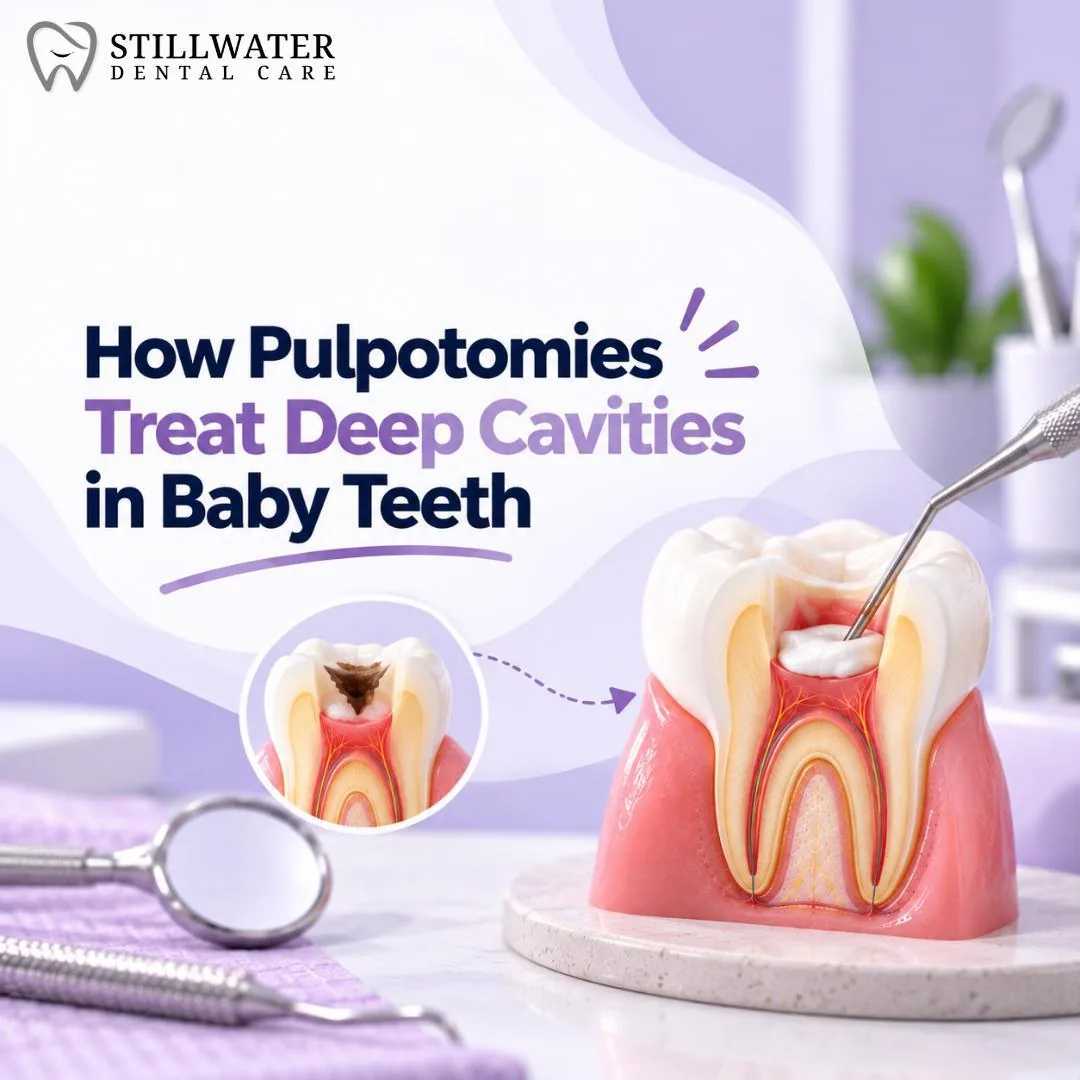
Parents often find a child holding a cheek and crying over a sore tooth. They worry that a deep cavity in a baby tooth could cause pain or trouble later on.
A pulpotomy removes infected pulp from the crown, while keeping healthy root pulp intact. This fact shows why dentists use it for many baby teeth. Here you will know when a pulpotomy is needed, what happens during the visit, and how it helps protect the tooth and future bite.
A pulpotomy treats deep cavities in baby teeth. Pediatric dentists use this dental procedure for children when tooth decay reaches the pulp chamber. Dentists remove infected coronal pulp while preserving healthy root pulp.
This stops infection from spreading through the entire nerve. The procedure differs from a root canal, because it removes only the coronal portion of the pulp.
The goal is to save the baby tooth and protect its roots. Children tolerate pulp tissue removal well, so this treatment works in pediatric dentistry. After treatment, a dental crown may be recommended depending on the tooth and needs.
The saved tooth keeps space for permanent teeth and supports proper oral development. It keeps functioning until natural shedding.
A dentist may suggest a pulpotomy when a child's tooth shows signs of serious decay deep inside. If your kid's mouth sounds like alarm bells with pain or puffiness, the problem might need fast action.
Deep decay in baby teeth can cause considerable issues. Parents should be aware of the signs that indicate their child may need a pulpotomy.
Recognizing these signs early helps ensure proper oral health and protects against further complications like infections and pain relief needs from procedures such as root canals later on.
Pain and swelling often signal trouble in baby teeth. Parents should watch for these symptoms as they may indicate the need for a pulpotomy.
The dentist removes the infected coronal pulp during a pulpotomy. They carefully keep the healthy root pulp intact to help the tooth stay functional.
Removing the infected coronal pulp is a key step in a pulpotomy. This procedure focuses on the crown part of the tooth, where decay often starts. Kids with deep cavities may have damage that reaches this sensitive area.
Pediatric dentists carefully remove any inflamed or infected tissue. It helps stop further spread of infection and protects the health of baby teeth.
This targeted approach saves healthy pulp in the root. By doing this, dentists maintain much of the tooth's structure while treating decay effectively. A proper pulpotomy allows for pain relief and keeps those little teeth safe until they naturally fall out, paving the way for adult teeth to come in smoothly.
A pulpotomy takes significant care to preserve healthy root pulp. This technique removes only the infected tissue in the crown part of a baby tooth. By keeping the healthy pulp in the roots, this procedure helps maintain tooth vitality and function. The goal is to prevent infection from spreading further into the tooth’s nerve system.
Children's baby teeth respond positively to this treatment. Dentists often find that preserving the root pulp allows these teeth to remain strong until they naturally fall out. For kids, saving their baby teeth supports proper oral development and makes future dental work easier. A happy smile enhances confidence and establishes good habits for adult teeth in the future.
A pulpotomy offers pain relief and prevents infections in little mouths. This procedure keeps baby teeth intact, allowing proper growth and development for permanent teeth.
A pulpotomy helps kids feel better by relieving pain and stopping infection. This dental procedure removes infected pulp tissue from the crown of the tooth, while keeping healthy pulp in the root.
By doing this, it prevents problems from spreading through the entire nerve of that baby tooth. Kids often experience less discomfort after a pulpotomy because their teeth respond well to losing some of that pulp.
Protecting against further bacterial contamination is crucial for oral health too. Saving a baby tooth means preserving its roots, which supports proper development as they grow up.
Preserving baby teeth is crucial for a child's oral development. These little teeth help with chewing and speaking. They also hold space for future permanent teeth. If a baby tooth suffers from deep decay, it can affect the growth of adult teeth. A pulpotomy keeps the tooth healthy and functional until it naturally falls out.
Children respond well to this dental treatment. After removing infected pulp, dentists save the healthy part in the root; this protects the overall structure of the tooth. Parents often feel relieved knowing that their child’s smile stays intact while waiting for those adult teeth to come in.
With proper care after a pulpotomy, kids can enjoy pain relief and improved oral health during their crucial growing years.
Pulpotomies play a crucial role in maintaining oral health for children. Saving baby teeth helps preserve the space needed for permanent teeth to grow in properly. This procedure removes infected or inflamed pulp tissue from the crown of the tooth, while keeping healthy pulp in the root intact.
Pediatric patients usually respond well to this treatment, which prevents further issues like infections that could affect adult teeth later on.
If decay damages baby teeth, it can lead to more than just immediate pain. Untreated decay may harm developing permanent teeth beneath them. A pulpotomy minimizes these risks by addressing existing cavities and allowing proper development of both baby and permanent teeth.
With effective cavity treatment through pulpotomies, parents can feel confident their children's smiles will remain bright as they transition to adulthood.
A pulpotomy is a dental procedure used to treat deep cavities in baby teeth. It involves removing the infected part of the tooth's pulp while leaving the healthy tissue intact.
Children may need pulpotomies when they have severe tooth decay that affects their baby teeth. This treatment helps save the tooth and prevents further pain or infection.
During a pulpotomy, dentists clean out the decay and disinfect the area. They then seal it to protect against future issues, allowing the tooth to continue functioning until it naturally falls out.
Most children feel little discomfort during a pulpotomy because dentists use local anesthesia to numb the area first. Afterward, some soreness might occur, but this usually goes away quickly with proper care.
Tell us a little about what you need — we'll be in touch shortly.
5619 W Loop 1604 N Suite 112, San Antonio, TX 78253, United States

Hi! I'm Tooth fairy! Your AI Assistant Ask me anything